


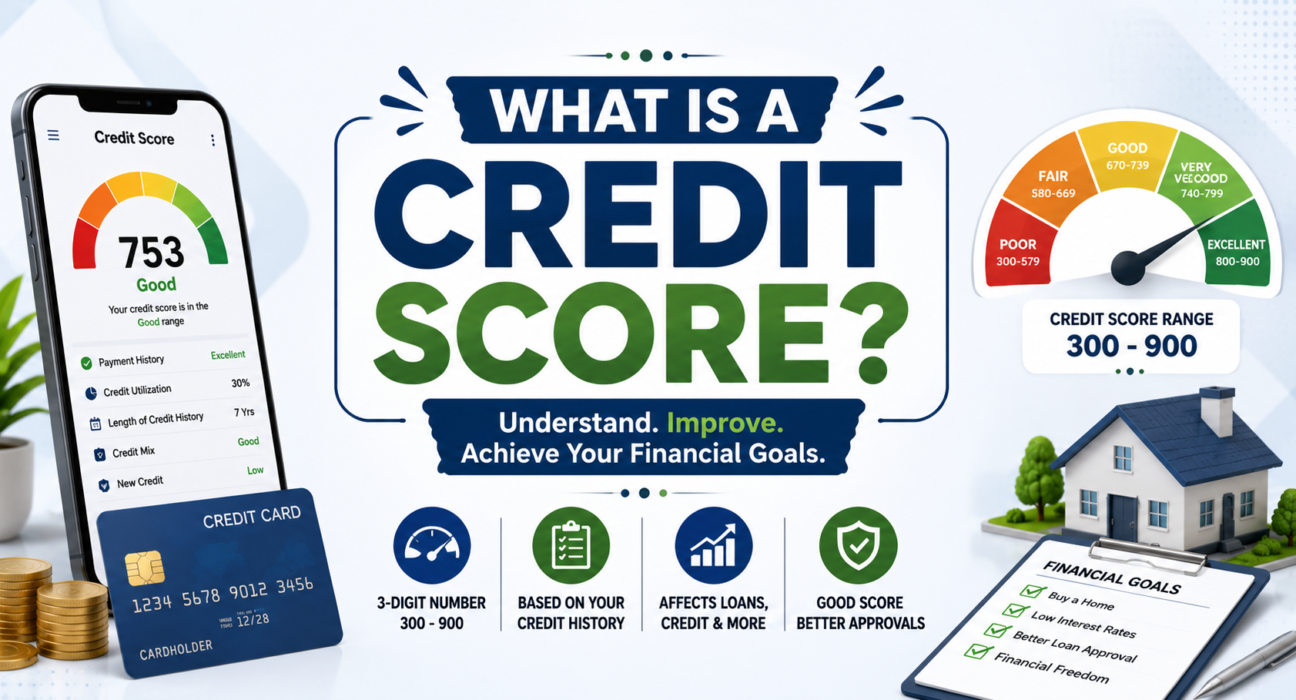
You’ve probably heard the term thrown around when applying for a loan, renting an apartment, or even signing up for a new phone plan. But what is a credit score, exactly—and why does everyone seem to care so much about it?
Simply put, your credit score is one of the most powerful numbers in your financial life. It influences whether you can borrow money, how much interest you’ll pay, and in some cases, whether you can even rent a home. Whether you’re just starting out financially or looking to make a major purchase, understanding your credit score is non-negotiable.
This guide breaks it all down—from credit score meaning to practical tips to improve your score—so you can take control of your financial future with confidence.
1. Credit Score Meaning: What Exactly Is It?
A credit score is a three-digit number—typically ranging from 300 to 850—that represents your creditworthiness. It tells lenders how likely you are to repay borrowed money on time. The higher the number, the more trustworthy you appear to banks, credit card companies, and other financial institutions.
Think of it as your financial report card. Just as grades reflect your academic performance, your credit score reflects how responsibly you manage debt and credit. It’s generated by credit bureaus—such as Equifax, Experian, and TransUnion in the U.S.—based on your financial history.
Understanding what is a credit score at its core is the first step toward making smarter money decisions. If you’re also exploring the broader world of personal finance, check out our guide on What Is Financial Investment for more context.
2. How Credit Scores Work
Your credit score doesn’t appear out of thin air. It’s calculated using a specific formula developed by data analytics companies, most notably FICO (Fair Isaac Corporation) and VantageScore. Here’s how credit scores work in terms of the key factors they consider:
- Payment History (35%): Do you pay your bills on time? This is the single biggest factor in your score.
- Credit Utilization (30%): How much of your available credit are you using? Keeping this below 30% is generally recommended.
- Length of Credit History (15%): The longer your credit accounts have been open, the better.
- Credit Mix (10%): A healthy mix of credit types—cards, loans, mortgages—can boost your score.
- New Credit Inquiries (10%): Applying for multiple new credit accounts in a short period can temporarily lower your score.
Each of these factors is weighted differently, which is why a single missed payment can have a surprisingly large impact on your overall score. Understanding What is Banking can also help you grasp how lenders use this data when reviewing your applications.
3. Credit Score Range: Where Do You Stand?
Knowing the credit score range helps you benchmark where you currently stand—and where you need to go. While ranges can vary slightly between scoring models, here’s a widely accepted credit rating guide:
| Score Range | Rating |
|---|---|
| 800 – 850 | Exceptional |
| 740 – 799 | Very Good |
| 670 – 739 | Good |
| 580 – 669 | Fair |
| 300 – 579 | Poor |
According to FICO data, the average American credit score sits at around 714—which falls into the “Good” category. However, even a score in the “Very Good” or “Exceptional” range can open significantly better financial doors. Use this range as your roadmap: know your number, then work toward improving it.
4. Why Credit Score Matters More Than You Think
Why credit score matters isn’t just about getting approved for a credit card. The implications are far wider than most people realize.
Your credit score affects:
- Loan approvals and interest rates: A higher score means better terms on mortgages, car loans, and personal loans.
- Rental applications: Many landlords run credit checks before approving tenants.
- Insurance premiums: In some states, insurers use credit data to set your premium rates.
- Employment opportunities: Certain employers—especially in finance—check credit histories as part of their hiring process.
- Utility deposits: Poor credit can mean paying a larger security deposit to set up electricity or internet services.
In short, what is a credit score if not a financial passport? It opens—or closes—doors across nearly every aspect of adult life. If you’re managing finances for a business as well, understanding What Is Business Finance will give you a more complete picture.
5. What Counts as a Good Credit Score?
A good credit score generally starts at 670 using the FICO model. But “good” is relative—what’s considered good depends heavily on what you’re trying to accomplish.
- For most credit cards: A score of 670+ will qualify you for most standard cards.
- For a mortgage: Many lenders prefer a score of 740 or higher to offer the best interest rates.
- For premium rewards cards: You’ll typically need 750+ to qualify for the most competitive offers.
The difference between a “fair” and an “exceptional” credit score can translate to tens of thousands of dollars in interest saved over the life of a mortgage. That’s not a minor detail—it’s a life-changing financial gap.
6. Credit Score for Loans: What Lenders Actually Look At
When you apply for a loan, lenders don’t just glance at your credit score and move on. They use it as a starting point in a broader assessment that includes your income, debt-to-income ratio, employment history, and the purpose of the loan.
That said, your credit score for loans plays a central role:
- Personal loans: Most lenders require a minimum score of around 580–600 for approval, though better rates kick in at 700+.
- Home loans (mortgages): Conventional loans typically require a score of 620 or higher, while FHA loans may accept as low as 500 with a larger down payment.
- Auto loans: Scores above 660 generally qualify for competitive auto loan rates.
- Business loans: If you’re applying as an individual guarantor, a score above 680 is often expected. Explore How to Register a Business in India if you’re also thinking about business financing in a global context.
The bottom line? The higher your score, the more leverage you have when negotiating loan terms.
7. How to Improve Your Credit Score
The good news: your credit score is not fixed. You can absolutely improve credit score over time with consistent, intentional habits. Here’s how:
Pay every bill on time. Set up automatic payments or calendar reminders. Even one missed payment can drop your score significantly—payment history accounts for 35% of your FICO score.
Reduce your credit utilization. If you’re regularly using more than 30% of your available credit, try paying down balances or requesting a credit limit increase.
Don’t close old accounts. Length of credit history matters. Keeping older accounts open—even if unused—maintains your average account age.
Limit hard inquiries. Every time you apply for new credit, a hard inquiry is recorded. Space out your credit applications and only apply when necessary.
Diversify your credit mix. If you only have credit cards, consider adding an installment loan (like an auto loan or personal loan) to show lenders you can manage different types of credit responsibly.
Results won’t appear overnight, but most people see meaningful improvement within three to six months of consistent effort.
8. Credit Score Tips to Build and Protect Your Number
Beyond the basics, here are some targeted credit score tips that many people overlook:
- Check your credit report regularly. You’re entitled to one free credit report per year from each of the three major bureaus at AnnualCreditReport.com. Errors on your report can drag your score down unfairly—dispute them immediately.
- Become an authorized user. If a family member has a long-standing account with a strong payment history, ask to be added as an authorized user. Their positive history can reflect on your report.
- Use a secured credit card. If you’re building credit from scratch, a secured card—where you deposit money as collateral—can be an effective starting point.
- Set small, recurring charges on older cards. To keep accounts active without overspending, put a small recurring charge (like a streaming subscription) on older cards and pay it off monthly.
- Consider credit-builder loans. Offered by many credit unions and online lenders, these small loans are specifically designed to help people establish or rebuild credit.
If you’re also exploring investment strategies to grow your wealth alongside your credit health, our guide on 10 SIP Secrets Every Investor is worth a read.
9. Financial Credit Health: A Long-Term Mindset
Improving your score isn’t a one-time project—it’s an ongoing commitment to financial credit health. Think of your credit profile the same way you think about your physical health: it requires regular attention, good habits, and the occasional check-up.
Financial credit health means:
- Monitoring your score monthly (many banks and apps offer free access)
- Reviewing your full credit report annually
- Keeping debt levels manageable relative to your income
- Planning major credit applications (like a mortgage) well in advance—ideally 12–24 months out—so you have time to optimize your score
The relationship between credit health and overall financial wellness is deeply intertwined. Strong credit reduces the cost of borrowing, which frees up cash for saving and investing. It creates a positive cycle that compounds over time.
Your Credit Score Is in Your Hands
What is a credit score if not a reflection of your financial choices over time? Every payment you make, every balance you carry, every account you open—it all adds up to a number that has very real consequences in your life.
The encouraging truth is that no matter where your score stands today, you have the power to change it. Start by pulling your free credit report, identifying any errors or problem areas, and committing to the habits outlined in this guide. Small, consistent actions—paying on time, keeping balances low, monitoring your report—add up to meaningful improvement over months and years.
Your credit score is a tool. Learn to use it wisely, and it will work in your favor at every stage of your financial life.